When people search for phone repair, they usually care about three things first: speed, price, and whether their device can be fixed at all. That makes sense. A cracked screen is annoying, a dead battery ruins the day, and a charging port that only works when the cable is bent at a suspicious angle is basically a tiny hostage situation.
But there is another factor customers should pay attention to: the cleanliness of the repair environment.
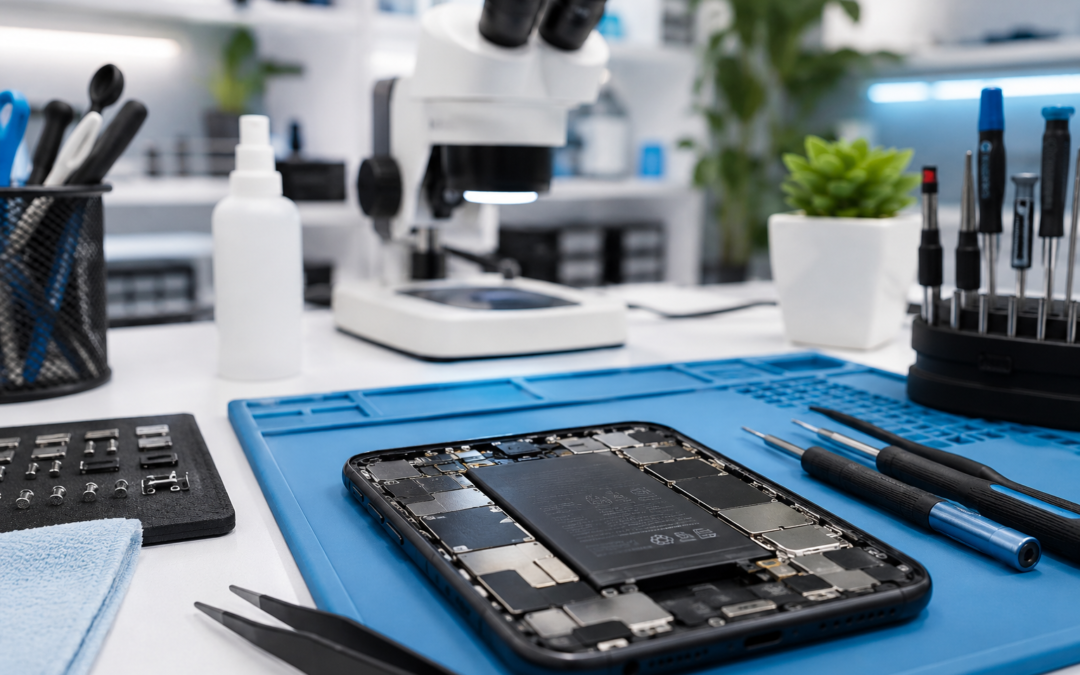
At SupaFast South Georgia Phone Repair, clean work areas are part of careful device handling. When a phone, tablet, or laptop is opened for repair, internal parts are exposed to the surrounding workspace. That is where cleanliness starts to matter.
Why A Clean Workspace Matters During Phone Repair
Modern phones are packed tightly with small, sensitive parts. Inside a phone, there may be:
| Internal Part | Why It Needs Careful Handling |
|---|---|
| Screen connectors | Small flex cables can be damaged or contaminated |
| Battery connectors | Poor handling can create safety and performance issues |
| Charging ports | Dust and debris can already be part of the problem |
| Speakers and microphones | Tiny openings can collect particles |
| Cameras | Dust can affect image clarity if it reaches sensitive areas |
| Logic board components | Small parts need controlled, careful handling |
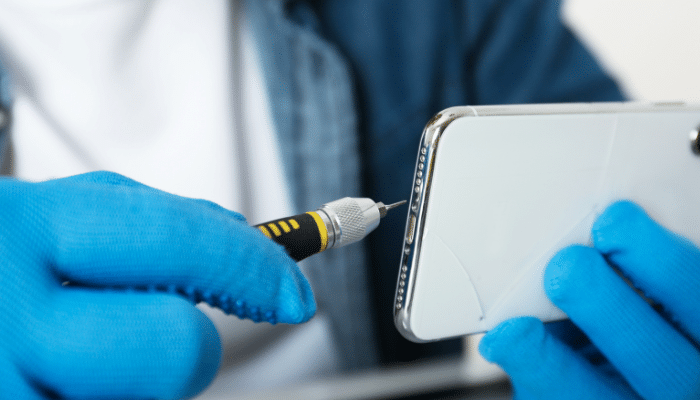
When a repair technician opens a device, dust, debris, oils, moisture, and loose particles can come into contact with parts that are normally sealed inside the phone.
That does not mean every speck of dust will destroy a device. It does mean a cleaner, more organized repair area supports better repair habits.
Cleanliness Is Not Just About Looks
A clean repair space is not only about making the shop look professional. It also helps technicians work more carefully.
A cluttered repair area can make it easier to misplace screws, mix up parts, or rush through the repair process. Phones use small brackets, adhesives, screws, clips, and cables. Keeping the workspace clean helps keep the repair process more controlled.
Here is the simple comparison:
| Clean Repair Environment | Messy Repair Environment |
|---|---|
| Tools are easy to find | Tools can get mixed up or misplaced |
| Small screws stay organized | Small parts are easier to lose |
| Surfaces are easy to inspect | Dust and debris blend into clutter |
| The repair process feels professional | The repair process can feel rushed or careless |
| Customers see attention to detail | Customers may question repair quality |
Customers may not see every step of the repair, but they can often tell when a shop takes care of the details. And phone repair is absolutely a details business.
Phones Collect More Than Cracks
Phones get handled constantly. They sit in pockets, cars, bags, countertops, job sites, and restaurants.
A 2023 systematic review and meta-analysis of healthcare workers in Africa found that 84.5 percent of the mobile phones studied were contaminated with bacteria. The review pulled together 26 eligible studies and 2,887 participants. The most common bacteria identified were coagulase-negative staphylococci, Staphylococcus aureus, and Escherichia coli.
That study focused on healthcare settings, not phone repair shops. Still, it shows a useful point: phones can carry surface contamination, and cleaning habits matter.
When a customer brings in a phone for repair, the outside of the device may already carry dirt, oils, and debris. If that device is opened on a poorly maintained surface, the repair environment adds another layer of risk. A cleaner workspace helps reduce that problem.
What Device Manufacturers Say About Cleaning
According to Apple’s official iPhone cleaning guidance, users may gently wipe exterior surfaces with a 70 percent isopropyl alcohol wipe, 75 percent ethyl alcohol wipe, or Clorox Disinfecting Wipes. Apple also says to avoid bleach, hydrogen peroxide, moisture in openings, submerging the phone, compressed air, and abrasive materials.
Samsung gives similar guidance for Galaxy devices. Samsung recommends powering the device down, unplugging it, removing covers or accessories, and using a lint-free microfiber cloth. Samsung also says not to apply liquid directly to the device and to avoid compressed air and spray bleach.
For customers, this matters because cleaning the outside of a phone is different from opening the device for internal repair. Once the device is open, the repair environment becomes part of the process.
Surface Cleaning vs. Repair Environment Cleanliness
These two ideas are connected, but they are not the same.
| Cleaning Topic | What It Means |
|---|---|
| Customer phone cleaning | Wiping the outside of the phone safely |
| Repair bench cleanliness | Keeping the work surface clean and organized |
| Tool cleanliness | Making sure tools are kept in usable condition |
| Component handling | Reducing unnecessary contact with sensitive parts |
| Shop cleanliness | Maintaining a professional environment overall |
A customer can keep the outside of their phone clean. A repair shop is responsible for keeping the repair area clean when the device is opened. That is the part many people do not think about until something goes wrong.
Workplace Cleanliness Reflects Professional Standards
Clean workspaces are important across many industries, not just phone repair. OSHA’s sanitation standard says that places of employment should be kept clean to the extent that the nature of the work allows.
That does not mean a phone repair shop needs to operate like a hospital cleanroom. It does mean cleanliness is a basic workplace standard, especially in businesses where customers trust professionals with valuable items.
This same principle applies in larger commercial settings. Companies like Impact Cleaning Services help offices, retail spaces, and industrial facilities maintain consistent operational environments, and they have been providing commercial and industrial cleaning since 1954. For repair businesses, the same logic plays out on a smaller scale: cleaner spaces support better work, and better work builds more trust.
Repairs That Benefit From A Cleaner Environment
Some repairs make cleanliness especially important.
| Repair Type | Why Cleanliness Matters |
|---|---|
| Screen replacement | Dust near the screen area can affect fit and finish |
| Battery replacement | Organized handling helps protect nearby components |
| Charging port repair | Ports often already contain lint or debris |
| Water damage diagnostics | Moisture and residue require careful inspection |
| Camera repair | Dust near camera parts can affect clarity |
| Laptop repair | More open surface area means more exposure during service |
Cleanliness does not replace technical skill. It supports it. A skilled technician working in a clean, organized space has a better setup for careful, consistent repairs.
What Customers Should Look For
Before choosing a phone repair shop, customers can look for simple signs of professionalism.
| Good Sign | Why It Matters |
|---|---|
| Organized repair stations | Suggests controlled handling |
| Clean counters and intake areas | Shows attention to customer-facing details |
| Proper tools | Reduces rough handling |
| Clear repair explanations | Builds trust before the device is opened |
| Careful device handling | Shows respect for the customer’s property |
A repair shop does not need to look fancy. It does need to look like the people inside know the difference between a working repair bench and a cluttered counter covered in random parts.
The Bottom Line
Phone repair is not just about replacing a broken part. It is about handling a device carefully from start to finish.
When a phone, tablet, or laptop is opened, internal components are exposed to the surrounding environment. A clean repair space helps reduce unnecessary dust, debris, moisture, and surface contamination during that process.
For customers, the repair environment is worth noticing. For repair shops, cleanliness is part of professionalism.
At SupaFast South Georgia Phone Repair, attention to detail matters at every stage of the repair process. Whether it is a screen replacement, battery installation, charging port repair, or internal diagnostic service, a cleaner workspace helps support better repair practices and a better customer experience.